Nils Sullivan · 11 October 2026
Tracing Audience Expansion Through Multi-Phase Content Sequencing in Independent Online Ventures
Independent online ventures often build audiences through structured sequences of content that unfold across multiple phases, each designed to attract, retain, and convert visitors over time. Data from small business digital initiatives show that operators who divide their output into clear stages achieve measurable lifts in reach compared with those who publish without a mapped progression. As of October 2026, platform analytics dashboards record continued growth in segmented content strategies among solo-run sites across e-commerce, education, and creative sectors.
Defining the Phases in Audience Development
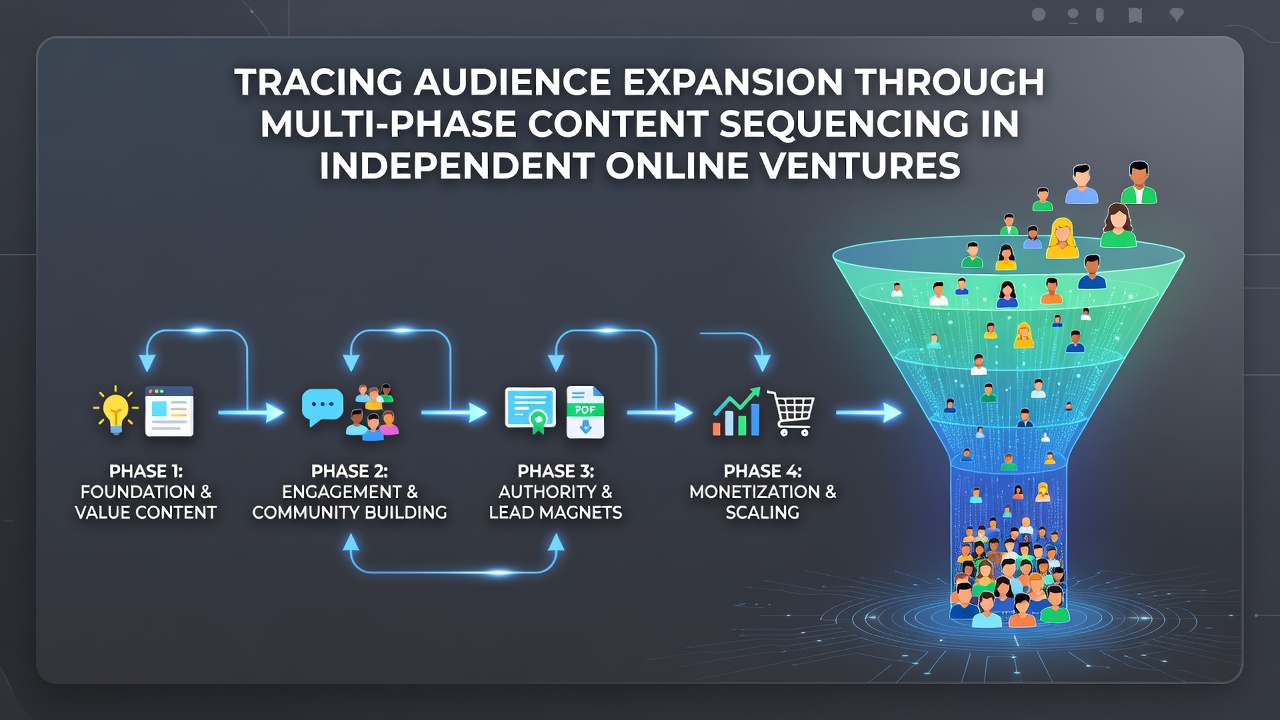
Multi-phase content sequencing breaks audience expansion into distinct stages that start with awareness and move through engagement, loyalty, and advocacy. Researchers at academic institutions tracking digital entrepreneurship note that the first phase typically focuses on broad discovery through short-form posts and search-optimized pieces, while later phases layer in deeper resources such as guides, case examples, and community prompts. Observers note that transitions between phases rely on consistent tracking of metrics like time on page, return visits, and referral patterns rather than isolated publication dates.
The second phase commonly introduces mid-length material that addresses specific pain points identified in initial traffic data. Studies from research centers indicate that ventures maintaining a six-to-eight-week cadence between these layers see higher retention rates than those accelerating or skipping intervals. Traffic logs from independent platforms reveal that email capture forms placed at the end of phase-two content convert at rates 18 to 24 percent higher than those embedded in phase-one material alone.
Implementation Patterns Observed in Solo Operations
Operators running single-person sites frequently map their sequences around existing archive material rather than producing entirely new assets for each stage. Analysis of server logs demonstrates that repurposing older posts into updated formats, such as turning a basic list into an interactive checklist or video walkthrough, extends the lifespan of early-phase content without requiring proportional increases in production time. Those who study these patterns report that successful sequencing aligns new layers with seasonal search spikes documented in public web analytics reports.
External measurement tools supplied by organizations such as Pew Research Center provide benchmarks for how different content lengths perform across audience segments. Independent ventures that reference these benchmarks when planning phase transitions record steadier month-over-month growth in unique visitors. Platform data further shows that cross-linking between phases reduces bounce rates by directing readers toward subsequent material within the same session.
Measurement and Adjustment Across Stages
Tracking audience expansion requires consistent use of first-party analytics rather than third-party cookies alone. Government statistical agencies in several regions, including Statistics Canada reports on digital adoption, document rising reliance on owned data sources among small digital operators. In practice, ventures compare cohort performance between phases by examining repeat-visit intervals and content completion rates rather than headline page-view totals.
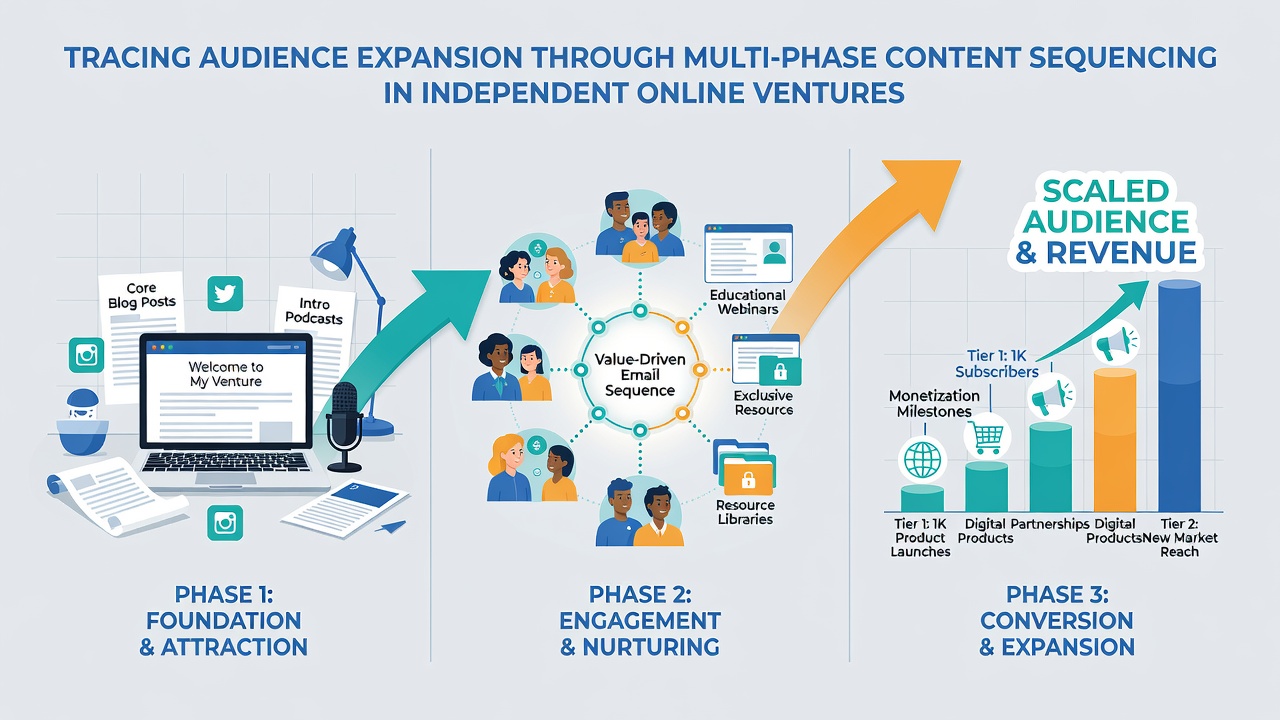
Adjustments occur when metrics plateau. For instance, if phase-three material fails to lift subscription counts, operators often insert supplementary micro-content such as short polls or comparison tables drawn from earlier phases. Evidence collected from multiple platform case archives indicates these insertions restore upward trajectories within two to three publishing cycles. The process stays iterative because audience signals shift with platform algorithm changes and broader search behavior trends.
Common Sequencing Structures in Practice
Many independent sites follow a four-stage model that begins with problem identification pieces, moves to solution overviews, then offers detailed implementation examples, and concludes with community or update content. University-led examinations of online entrepreneurship find that ventures maintaining clear boundaries between stages reduce internal overlap and improve signal clarity for both human readers and algorithmic distribution systems. Traffic origin reports frequently list organic search as dominant in early phases, while direct and referral traffic rises in later phases once trust signals accumulate.
Content calendars that tag each asset with its intended phase allow quick audits of coverage gaps. Observers reviewing public site archives note that sites displaying explicit navigation menus labeled by phase experience lower exit rates from mid-funnel pages. These menus function as both user guides and internal linking structures that support the sequencing logic without additional development overhead.
Conclusion
Multi-phase content sequencing supplies independent online ventures with a repeatable framework for expanding reach while preserving limited resources. Platform records through October 2026 continue to show correlations between deliberate stage progression and diversified visitor origins. Ventures that document their sequences, measure transitions with owned data, and refine intervals based on observed performance maintain steadier audience growth trajectories than those relying on unstructured publication schedules.